Your reality is your relationship to it.
Last time, I said something that lingered: you are not discovering who you are—you are practicing who you are.
And if you follow that far enough, something else starts to shift. Not just identity.
Reality.
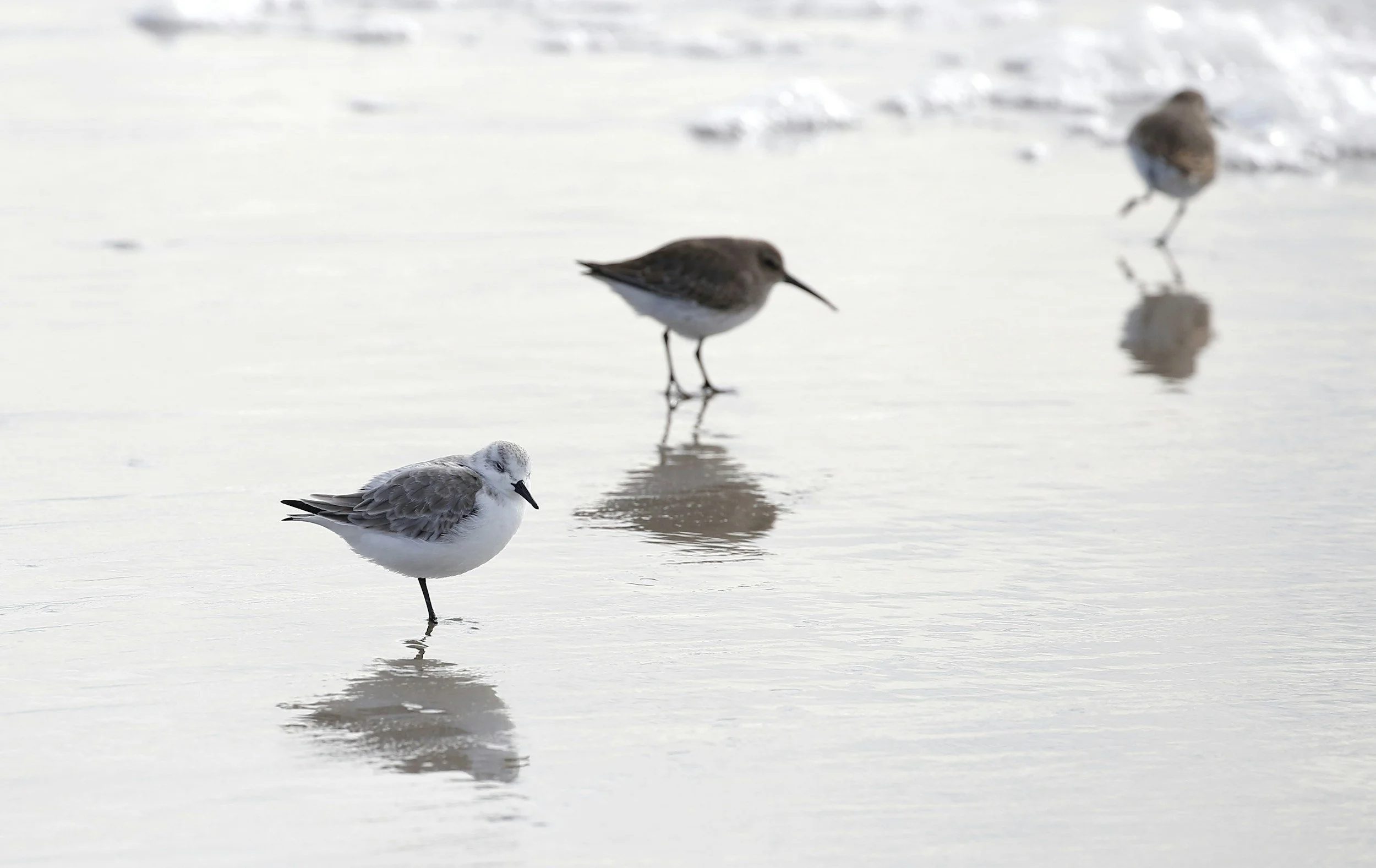
Most people think they experience reality as it is. Directly. Objectively. As something that exists outside of them—fixed, shared, and stable. The same water we're all standing in. But stand on a shoreline long enough and you’ll notice something.
The ocean is the same. The tide is the same. And yet—one person walks it like it’s open space. Another braces like something is about to take them under. Same water. Different worlds.
This isn’t metaphor in the abstract. You’ve seen it. Two people in the same room: One feels ignored. One feels relieved. One hears criticism. One hears clarity. One experiences distance. One experiences freedom. Nothing in the environment has changed. But everything in the experience has.
Our knee-jerk is to explain this away. Personality. Sensitivity. Perspective. But that doesn’t go far enough. Because it still assumes that reality is something out there that you are accessing and then layering interpretations onto.
But what if that split isn’t real? What if you don’t experience reality first and interpret it second—but are always, already, relating to it?
Not observing. Not receiving. Actively relating.
This is your stance. Even when you think you’re being neutral, it’s there. Open or guarded. Reaching or withdrawing. Scanning for threat or scanning for possibility. Softened. Braced. Leaning in. Pulling back. Rarely examined but always operating.
Last time, we talked about how repetition–and not revelation–shapes who you become. That same truth is carried beyond identity and shapes how you meet the world. A way of meeting that, over time, starts to feel like the world itself.
Years spent bracing makes reality feel sharp. Unpredictable. Something to manage carefully. Years spent reaching makes it feel expansive. Full of openings. Something to move toward. Neither is “more real.” But both are real in their consequences.
Now, settle in, because this is where things get murky. Because once a stance is practiced long enough, it disappears from view. It becomes invisible. You don’t see yourself bracing. You see a world that requires it. You don’t see yourself withdrawing. You see a world that feels distant. And because of that—it becomes very easy to believe that your experience is truth.
Truth doesn’t shape your experience. But your relationship to it does.
I’ve observed this rhythm in my own life in ways that were difficult to admit at the time. There were periods where everything felt hostile. People felt deceptive. Conversations felt manipulative. The world felt like something I had to be vigilant against.
And I could explain it. Point to the traumas, the circumstances. Name the dynamics. Track the patterns in other people. But underneath that, there was a quieter truth: I was meeting everything expecting to be hurt. Not dramatically. Not in a way anyone else would have noticed. But enough to shape the returning tide.
Stance doesn’t just filter experience. It organizes response.
A braced body speaks differently. Listens differently. Chooses differently. And the world responds. Most people are trying to change outcomes. Get different results. Create better circumstances. Fix what’s happening around them. But if your stance remains the same, those outcomes tend to reorganize back into something familiar. Different details. Same shape.
You’ve probably felt this before. A new environment that slowly starts to feel like the old one. Different people, same tides. Different situation, same emotional tone. It’s not coincidence. It’s continuity. The stance comes with you. And unless it shifts, reality has a way of arranging itself around it.
This is where people either overcorrect or disengage. They hear this and collapse it into: So it’s all about mindset. Or: So nothing is real. Neither is useful. You can’t invent reality. There are conditions you don’t control. Structures that shape what is possible. Limits that are real and consequential. But within those limits—there is still orientation.

You may not choose the terrain. But you choose how you walk it. And that matters more than it seems. Stance isn’t just internal. It shows up in your speech. Where you stay. Where you leave. What you assume before anything has happened. It is subtle. But it is constant. And because it is constant, it becomes formative.
If identity is something you practice, stance is the way you practice it.
Which means it can shift. I remember a time where my instinct was always to anticipate. To predict the waves before they arrived. It made me precise. Attuned. But it also kept me slightly ahead of everything—never fully in contact. The shift wasn’t to become “open” in some abstract way. It was more exact than that.
To stay a second longer before interpreting. To let something land before deciding what it meant. To notice the moment my body started to tighten—and not immediately follow the story that created. It didn’t feel natural. It felt exposed. Like standing before a great body of water. But something changed. The world didn’t become softer. It became less predetermined.
Now, don't miss this part. You don’t shift your stance to feel better. You shift it to experience more accurately. More fully. And sometimes that does feel better. Sometimes it doesn’t. But it does change what is possible. Because when your stance shifts, reality stops reflecting it.
Where am I bracing before anything has happened? Where am I pulling back before contact is made? Where am I already deciding what this is, before letting it be what it is?
Notice your stance in one moment. One interaction. One decision
And then—slightly—shift.
Stay a second longer. Speak a fraction more directly. Let something land without immediately shaping it. It will feel unfamiliar. Maybe even wrong. But if you repeat it—again, and then again—something begins to reorganize. Not just who you are. But the world you exist within.
Don't believe me? Then think about this: If you kept relating to reality the way you are right now—what would it keep creating?
Sit with that. Until then.
🌊
